What European Pharmacists Are Allowed to Tell You That American Pharmacists Are Not

A Different Kind of Pharmacy Visit
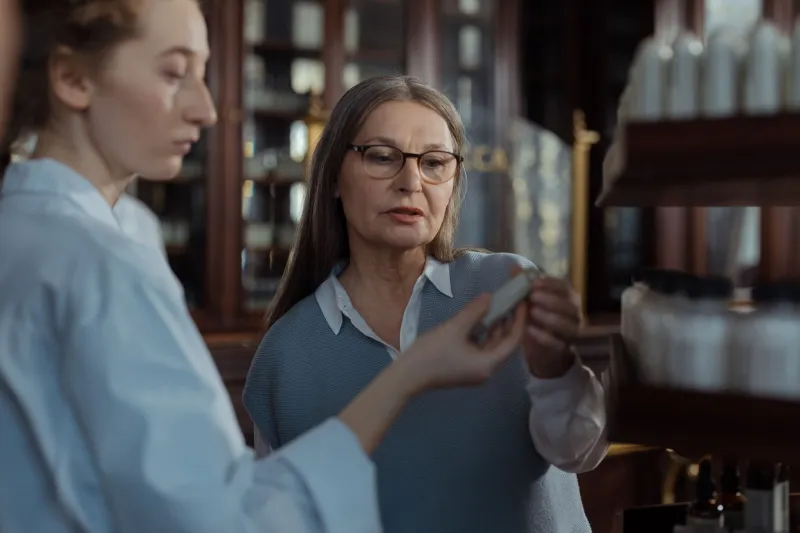
Imagine walking into a pharmacy in Vilnius or Riga with a persistent sinus complaint. The pharmacist does not simply point you toward the cold-and-flu aisle. She asks about the duration of your symptoms, whether you have a fever, whether you have a history of nasal polyps or allergies. She considers contraindications with any medications you already take. Then she makes a recommendation — a specific product, a specific dosage, and a clear instruction about when to stop self-treating and see a physician instead.
Now imagine walking into a Walgreens or CVS with the same complaint. The pharmacist behind the counter is qualified, often highly so. But the regulatory and institutional environment in which they operate constrains them in ways that their Eastern European counterparts are not. The result is a quietly significant gap in accessible healthcare — one that costs American patients time, money, and occasionally their health.
The Regulatory Architecture Behind the Difference
In the United States, the over-the-counter medication market is governed primarily by the FDA's monograph system, which defines which active ingredients can be sold without a prescription and at what dosages. This system is designed to protect consumers from harm, and it does so effectively in many respects. However, it also creates a ceiling on what pharmacists are formally empowered to recommend. American pharmacists are trained clinicians, but their professional authority in the OTC space is largely informal — they can offer guidance, but the regulatory scaffolding does not formalize their role as independent clinical decision-makers at the point of sale.
In Lithuania, Latvia, Estonia, and much of Eastern Europe, the regulatory structure tells a different story. Pharmacists in these countries operate under frameworks established in part through European Medicines Agency guidance and national pharmacy law that explicitly position the pharmacist as a first-line healthcare provider. The pharmacy is not merely a retail outlet; it is a recognized clinical touchpoint. When a patient presents with a complaint, the pharmacist is expected to conduct a structured assessment — a process sometimes called pharmaceutical anamnesis — before recommending any product.
This is not informal courtesy. It is a professional obligation, reinforced by licensing standards and continuing education requirements that go considerably deeper than what most American pharmacists encounter in their OTC training.
What Pharmaceutical Anamnesis Actually Looks Like
The term may sound technical, but the practice is straightforward. A pharmacist trained in the Eastern European model approaches a patient complaint the way a general practitioner approaches a preliminary consultation. They ask systematic questions: How long have you had this symptom? Has it changed in character? Do you have any chronic conditions? Are you pregnant or breastfeeding? What have you already tried?
From these answers, the pharmacist builds a brief clinical picture. In many cases, that picture is consistent with a self-limiting condition that responds well to OTC treatment. The pharmacist recommends accordingly, often drawing on a broader formulary of available products than American consumers typically encounter — including herbal preparations with documented efficacy, combination therapies, and topical treatments that occupy a more prominent place in European pharmacy culture.
In other cases, the picture raises flags. A sinus complaint accompanied by high fever and facial pain suggests bacterial sinusitis, not a viral cold. A cough that has persisted for three weeks warrants investigation, not suppression. In these scenarios, the Eastern European pharmacist does something that may seem simple but is clinically significant: they decline to recommend a product and instead direct the patient to a physician, explaining specifically why.
This triage function is where the real healthcare value lies. Not every pharmacy visit in Eastern Europe ends with a purchase. Some end with a referral. That outcome, too, is a form of pharmaceutical care.
The American Pharmacist's Constrained Position
None of this is meant to suggest that American pharmacists lack knowledge or commitment. Pharmacy education in the United States is rigorous, and Doctor of Pharmacy programs produce graduates with substantial clinical training. The constraint is structural, not personal.
In the American retail pharmacy environment, productivity metrics, corporate staffing models, and liability concerns all shape what a pharmacist does with their time. A pharmacist managing a queue of prescription fills, insurance verifications, and vaccination appointments has limited capacity to conduct a ten-minute pharmaceutical anamnesis with every OTC inquiry. Beyond the practical pressures, the formal authority to make clinical OTC recommendations in a structured way is simply not codified into American pharmacy practice the way it is in the Baltic states.
The result is that American patients often receive one of two responses to an OTC question: a brief aisle-pointing gesture from a pharmacy technician, or a cautious suggestion to consult a physician. The latter is not wrong — it is, in fact, often appropriate — but when it becomes the default answer for conditions that a trained pharmacist could safely and accurately assess, it generates unnecessary doctor visits and contributes to a system already strained by demand.
A Scenario Worth Considering
Consider a straightforward example. A patient in Ohio presents at a pharmacy asking about treatment for a mild urinary tract infection. They describe classic symptoms: burning, frequency, no fever, no back pain. In the United States, the pharmacist can point them toward phenazopyridine for symptomatic relief and will almost certainly recommend they see a doctor for an antibiotic prescription. That is two visits, two co-pays, and a waiting room.
In Estonia, a pharmacist with equivalent training but a different regulatory mandate can conduct a structured assessment, confirm the absence of complicating factors, and in some cases recommend a short-course OTC treatment or a well-evidenced herbal preparation while clearly documenting when the patient should escalate to a physician. The patient gets care faster, the healthcare system absorbs less unnecessary demand, and the pharmacist fulfills the clinical role they were trained for.
This is not about cutting corners on safety. It is about deploying clinical expertise at the right point in the care pathway.
What American Patients Can Learn From This Model
For US patients, the practical takeaway is twofold. First, when you visit a pharmacy, do not underestimate what your pharmacist knows. Ask specific questions. Describe your symptoms in detail. A good pharmacist, even within the constraints of the American system, can often provide more guidance than the average retail pharmacy interaction suggests.
Second, be aware that the OTC landscape you see on American shelves represents a regulatory choice, not the full universe of evidence-based options. Eastern European pharmacy models have kept certain preparations in active clinical use — including specific phytotherapeutic compounds and combination OTC products — that have largely disappeared from American pharmacy culture despite reasonable supporting evidence.
The pharmacy shelf is not neutral. It reflects policy decisions, regulatory histories, and professional frameworks that differ substantially across borders. Understanding those differences is the first step toward demanding more from the system you have — and recognizing when it is worth looking beyond it.