Five Years to Fill a Prescription: The Rigorous European Pharmacy Education Americans Never See
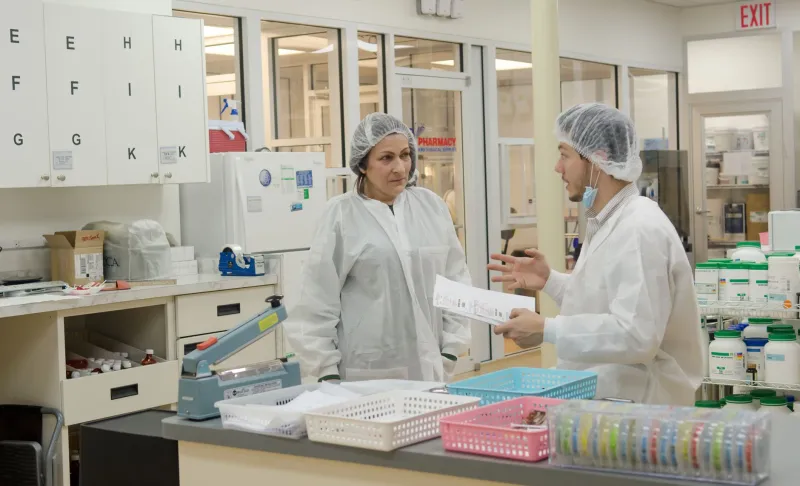
When an American walks into a chain pharmacy and asks about a drug interaction, the person behind the counter almost certainly holds a Doctor of Pharmacy degree — a credential that sounds impressive and, in many respects, is. But credentials do not always tell the full story of what a practitioner learned, how long they spent learning it, or how much of that learning happened in the real world rather than a lecture hall.
In Lithuania, Latvia, and Estonia, the path to becoming a licensed pharmacist is structured around a different philosophy entirely. It is longer, more clinically immersive, and deeply rooted in the idea that a pharmacist is not simply a dispenser of medications but a frontline healthcare professional whose judgment patients depend on at some of the most vulnerable moments of their lives.
What a Lithuanian Pharmacy Degree Actually Requires
At Vilnius University and the Lithuanian University of Health Sciences — two of the primary institutions producing licensed pharmacists in the country — the pharmacy program spans five full years of integrated study. This is not five years of general science followed by a professional degree. It is five years of pharmacy-specific education, combining pharmacology, pharmaceutical chemistry, clinical pharmacokinetics, botany, toxicology, and patient counseling into a single continuous curriculum.
Clinical placements begin early and accumulate substantially over the course of the degree. Students rotate through hospital pharmacy departments, community dispensaries, and pharmaceutical manufacturing facilities. By the time they graduate, they have logged hundreds of supervised hours in environments where real patients present real problems — not simulated scenarios, but actual cases requiring actual judgment.
The result is a graduate who has seen, in practice, what drug-drug interactions look like in elderly patients managing multiple chronic conditions. Who has counseled patients directly on dosing schedules, contraindications, and what to do when a medication causes an unexpected reaction. Who understands not just the pharmacology of a compound but its place within a patient's broader health picture.
How the American Model Diverged
The American Doctor of Pharmacy, or PharmD, is a four-year professional degree — but it follows a prerequisite undergraduate phase that typically adds two to four years. On paper, the total time investment can appear comparable. In practice, the structure differs in ways that matter enormously to patient outcomes.
A significant portion of early American pharmacy education takes place in lecture-based settings, with clinical exposure concentrated in the final year through Advanced Pharmacy Practice Experiences, commonly known as APPEs. These rotations are valuable, but they arrive late in the educational sequence, after the student has already formed the bulk of their theoretical knowledge base in relative isolation from the clinical environment.
Furthermore, the American system is designed around a retail and institutional pharmacy infrastructure that has, over decades, shifted the pharmacist's role increasingly toward verification and dispensing rather than consultation. The education system, consciously or not, reflects that reality. Students are trained for the jobs that exist — and in the United States, those jobs are often defined more by prescription volume than by patient interaction time.
The Consultation Gap and Why It Matters
This structural divergence creates a tangible gap in what patients actually receive when they pick up a prescription. In Baltic pharmacies, a consultation is not an optional add-on — it is a professional expectation, often required by both institutional protocol and regulatory standard. Pharmacists are trained to initiate conversations about how a medication should be taken, what side effects to monitor, and whether the prescribed therapy aligns with anything else the patient is currently taking.
In the United States, that kind of conversation is possible, and many individual pharmacists do conduct it. But the system does not consistently support it. High prescription volumes, understaffed counters, and the physical design of most American retail pharmacies — with their drive-through windows and point-of-sale placement — actively discourage the kind of unhurried, seated consultation that Eastern European models normalize.
The education gap compounds this environmental problem. A pharmacist trained primarily in a high-volume, verification-oriented system may simply not have the depth of clinical exposure to identify a subtle interaction or flag a dosing concern that a Baltic-trained counterpart would catch reflexively.
What Botanical and Integrative Pharmacology Adds to the Picture
One area where European pharmacy education diverges particularly sharply from American programs is in the formal study of botanical medicine and phytopharmacology. Lithuanian pharmacy students receive structured coursework in medicinal plants — not as an alternative medicine elective, but as a core component of pharmaceutical science.
This matters because a substantial portion of the global patient population uses herbal supplements, traditional remedies, and plant-derived preparations alongside conventional medications. St. John's Wort interacts with dozens of pharmaceutical compounds. Valerian root affects sedative thresholds. Ginkgo biloba influences anticoagulant activity. A pharmacist who has studied these interactions in depth is a meaningfully different resource than one who has not.
In the United States, integrative pharmacology remains largely peripheral to mainstream pharmacy education. Patients who use supplements — and surveys consistently suggest that more than half of American adults do — are often navigating those choices without the benefit of a pharmacist who has been formally trained to guide them.
The Regulatory Framework That Shapes the Practitioner
Education does not exist in a vacuum. The depth and character of pharmacy training in Lithuania and across the Baltic region reflects a regulatory environment that assigns pharmacists a more expansive professional role than their American counterparts typically occupy.
Baltic pharmaceutical regulation, shaped in part by European Union directives, positions the community pharmacist as a healthcare provider with defined responsibilities for patient safety and medication appropriateness. That regulatory expectation drives institutional investment in rigorous training. Programs are designed to produce practitioners capable of meeting those responsibilities.
In the United States, pharmacy regulation varies considerably by state, and the professional scope of the pharmacist — while expanding in some jurisdictions — has historically been defined more narrowly. Education tends to follow scope, and scope tends to follow reimbursement. Until American healthcare policy more consistently rewards pharmacist consultation as a billable, valued service, the incentive to train pharmacists for that role will remain incomplete.
What American Patients Can Do With This Knowledge
Understanding that your pharmacist may have received less clinical preparation than a European counterpart is not a reason to distrust them — it is a reason to engage with them more deliberately. Ask questions. Request a consultation rather than simply collecting your bag at the counter. Inquire specifically about interactions with any supplements you take. If your pharmacy is too busy to accommodate that conversation, that itself is information worth noting.
For those managing complex medication regimens, seeking out a pharmacist who practices in an independent or clinical setting — rather than a high-volume retail chain — can make a meaningful difference. Pharmacists in those environments often have more time, and sometimes more training orientation, toward the kind of comprehensive counseling that European models have long treated as standard.
The pharmacy school they do not tell you about is not a secret institution. It is simply a different set of choices — about time, about clinical immersion, about what a pharmacist is ultimately for. Those choices produce different practitioners. And for patients navigating complex health decisions, that difference is worth understanding.