Pills by the Week, Not by the Bottle: The Case for Unit-Dose Packaging in American Pharmacy

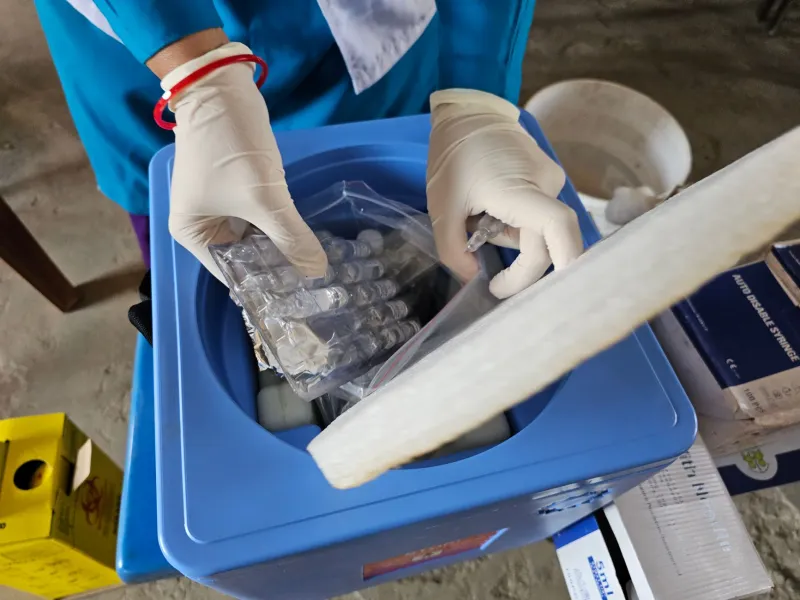
Photo: pharmacist preparing weekly blister pack medication organizer pharmacy counter, via ajp.com.au
The Amber Bottle Is Not a Neutral Container
For most American patients, the pharmacy experience ends with a labeled amber vial and a set of instructions that must be translated into daily behavior at home. The container is efficient for counting, shipping, and storage. It is not especially good at protecting patients from the cognitive work of managing several medicines at once. In Lithuania and neighboring Baltic states, a different default is common: patient-specific blister packs, unit-dose cards, or multi-dose pouches prepared by the pharmacy. The packaging does not merely organize pills. It moves a portion of the adherence burden from the patient to a system that can check it.
That distinction matters because medication errors rarely announce themselves. A missed dose, a doubled dose, or a tablet taken at the wrong time can look like an ordinary day until it becomes an emergency department visit. Unit-dose packaging is not a miracle, but it is a practical safety intervention that deserves more attention in the United States than it currently receives.
How the Baltic Model Works
At its best, the Baltic model begins with a medication review. The pharmacist reconciles the patient's list, checks for duplications and interactions, and contacts the prescriber when something does not fit. The pharmacy then prepares a weekly or monthly card. Each pocket is sealed and labeled with a day and time. The pharmacist or a trained technician verifies the finished pack, and the patient receives counseling on how to use it.
In Lithuania, community pharmacies may prepare these packs in-house, while some larger arrangements use centralized packaging services. The exact workflow varies, but the principle is consistent: packaging is a pharmacy service, not a consumer gadget. Good programs also recognize exceptions. Moisture-sensitive medicines, liquids, and some as-needed drugs may need to stay in their original containers. The pack is a tool, not a rule.
What the Evidence Shows
The evidence on multi-compartment compliance aids is not uniform, but it is consistent enough to be useful. Studies of older adults with polypharmacy and cognitive impairment generally show improved adherence and fewer missed doses when medicines are organized into patient-specific packs. Some studies also suggest reduced medication waste and fewer duplication errors. The strongest results appear when packaging is paired with pharmacist review and patient counseling rather than delivered as a stand-alone product.
There are caveats. Packaging can introduce new errors if the packing process is rushed or poorly verified. It does not solve cost barriers, forgetfulness caused by depression, or deliberate nonadherence. It is also not necessary for every patient. But for the right patient, a well-run blister-pack service turns a daily guessing game into a checked process. In the Baltic context, that process is treated as routine pharmacy work.
Why US Pharmacies Have Been Slow
US pharmacy workflow has been optimized for speed and volume. Counting machines, amber vials, and drive-through windows are built around a model in which the patient receives a supply and manages it at home. Adherence packaging exists in the United States, but it is often offered as a niche service, a mail-order pouch system, or a program for selected high-risk patients. It is not the default.
Reimbursement is one barrier. Pharmacies are generally paid for dispensing, not for the time required to review a regimen and prepare a verified pack. State rules vary, labeling requirements can be rigid, and pharmacy benefit contracts do not always accommodate packaging changes. Pharmacist time is another constraint. In 2026, quality measures and star ratings create stronger incentives for adherence, but they do not automatically fund the workflow that makes adherence easier. The result is uneven adoption: some chains and independent pharmacies offer excellent packaging services, while many patients never hear about them.
A Practical Question for American Patients
Patients with complex regimens should ask directly. Does the pharmacy offer multi-dose blister or pouch packaging? Is it prepared and verified by a pharmacist? How are medication changes handled mid-cycle? What does it cost, and does insurance cover it? Can the patient try one month before committing? What happens to as-needed medicines? These questions are not demands for luxury. They are questions about whether the pharmacy can support the regimen it dispenses.
What Would Need to Change
Wider adoption in the United States would require reimbursement for packaging and medication review, clearer state rules, workflow integration, and better use of electronic records. It would also require patient education. The Baltic model is not perfect, and smaller pharmacy markets are not directly transferable to the US scale. But the underlying principle is sound: packaging is part of therapy. Aptekai.t has long argued that medication safety is shaped as much by systems as by molecules. The amber bottle remains the American default. For patients managing five or more medicines, that default may be a quiet hazard.