Capsule, Claim, or Contaminant: Why European Pharmacy-Grade Supplements Expose a Dangerous Gap in American Standards

Every year, Americans spend more than fifty billion dollars on dietary supplements. Vitamins, minerals, herbal extracts, protein powders, probiotics, and an expanding constellation of branded wellness products line the shelves of pharmacies, grocery stores, and online retailers. The assumption embedded in each purchase is that the product contains what the label claims, in the quantity stated, free from harmful adulterants.
That assumption, in the United States, is largely unverified by law.
In Lithuania, Poland, and across the Baltic states, the situation is meaningfully different. Not because Eastern European consumers are inherently more cautious, but because the regulatory architecture governing supplements—particularly those sold within licensed pharmacies—imposes standards of quality control that the American system, by design or neglect, does not require.
The Regulatory Foundation: Why the FDA Cannot Do What Europeans Expect
The legal basis for supplement oversight in the United States is the Dietary Supplement Health and Education Act of 1994, known as DSHEA. This legislation, now three decades old, classified dietary supplements as a distinct category of food rather than as drugs. The consequence is profound: manufacturers are not required to demonstrate safety or efficacy before bringing a product to market. The FDA can only intervene after a product has been shown to cause harm—a reactive posture that places the burden of proof on regulators rather than producers.
The FDA does require that manufacturers follow Current Good Manufacturing Practices, a set of production standards intended to ensure consistency and prevent contamination. However, enforcement is limited, inspections are infrequent, and the sheer volume of products—estimated at more than ninety thousand distinct supplements on the U.S. market—makes comprehensive oversight functionally impossible.
In the European Union, supplements are regulated under a combination of food law and, where health claims are involved, stricter substantiation requirements managed by the European Food Safety Authority. Member states, including Lithuania and Estonia, additionally impose national-level requirements. Critically, supplements sold through licensed pharmacies in these countries are often held to pharmaceutical-grade manufacturing standards, which include batch testing, third-party verification, and documented ingredient sourcing.
What Pharmaceutical-Grade Actually Means
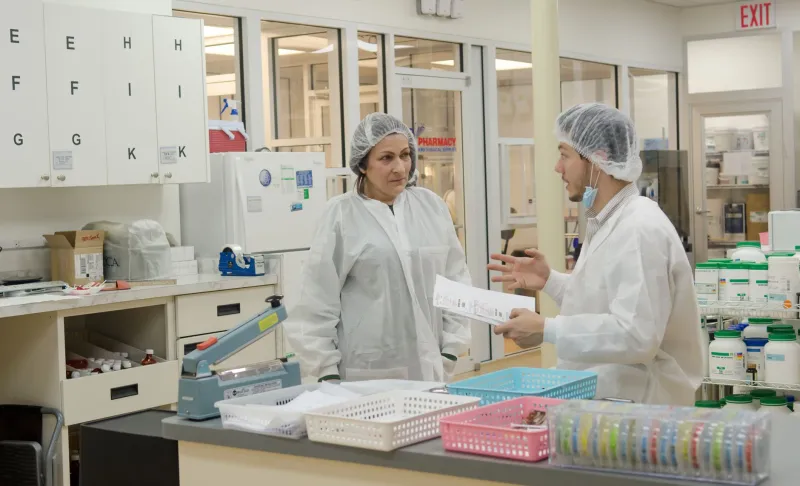
The phrase "pharmaceutical-grade" is used loosely in American marketing, often as a persuasive claim rather than a verified status. In the context of Eastern European pharmacy practice, it carries a specific meaning. A supplement manufactured to pharmaceutical standards has been produced in a facility that meets the same quality controls required for licensed medications. That includes verified raw material purity, controlled production environments, batch-to-batch consistency testing, and documented traceability from supplier to shelf.
When a Lithuanian pharmacist recommends a magnesium supplement or a vitamin D preparation, the product they are recommending has typically passed through this verification chain. The pharmacist has professional accountability for that recommendation—a fact that shapes which products they stock and endorse.
In the United States, a pharmacist recommending a supplement from a major retail chain has no such assurance. Independent testing organizations such as ConsumerLab and NSF International have repeatedly found that American supplements frequently contain less of the active ingredient than labeled, more of unlisted compounds, or in some cases, pharmaceutical adulterants—including prescription drugs added to weight loss or sexual enhancement products without disclosure.
The Contamination Problem Is Not Theoretical
The FDA's own adverse event reporting system documents thousands of supplement-related injuries and deaths annually, though experts believe significant underreporting means the true figure is considerably higher. Contaminated protein powders containing heavy metals. Herbal products spiked with undisclosed stimulants. "Natural" sleep aids containing pharmaceutical-level sedatives. These are not rare anomalies—they are recurring findings in independent laboratory analyses.
Eastern European regulators have not been immune to all such incidents, and it would be inaccurate to suggest the region has achieved a flawless record. What differs is the structural response. When contaminated products are identified in Lithuanian or Polish markets, the regulatory pathway for recall and manufacturer accountability is clearer and more rapid. The pharmacy distribution channel itself acts as a filter, because licensed pharmacies have professional and legal incentives to avoid stocking products that have not met acceptable quality thresholds.
American supplements, by contrast, move through retail chains that have no such professional accountability. A grocery store or mass-market retailer faces no particular liability for stocking a supplement that delivers half the stated dose of vitamin C. The consumer has no straightforward recourse, and the manufacturer faces no pre-market obligation to have demonstrated otherwise.
The Labeling Gap: Claims Without Consequences
Beyond contamination, the language on American supplement packaging warrants scrutiny. DSHEA permits manufacturers to make "structure/function claims"—statements suggesting a product supports normal biological functions—without requiring clinical evidence. A supplement can legally claim to "support immune health" or "promote cognitive function" without a single published trial demonstrating that it does either.
European regulations, enforced through the European Food Safety Authority's assessment process, require that health claims on supplements be substantiated by scientific evidence before they are permitted on labels. The list of approved claims is published and publicly accessible. Manufacturers who wish to market a new claim must submit evidence for review. This does not guarantee that every product on European shelves is clinically validated, but it establishes a standard of accountability that American labeling law does not.
For U.S. consumers, the practical implication is that navigating the supplement aisle requires a level of scientific literacy that most people reasonably do not possess. Identifying which products have sought third-party certification, which brands have been independently tested, and which claims have any evidentiary basis is a research project, not a shopping experience.
What American Consumers Can Learn—and Demand
The Eastern European pharmacy model does not suggest that every supplement is unnecessary or that wellness products have no legitimate role in health maintenance. Many do. Vitamin D deficiency is well-documented in northern European populations, and Baltic pharmacists routinely recommend evidence-based supplementation with verified products. The distinction is not between supplements and no supplements—it is between verified and unverified.
American consumers can take practical steps within the current system: seeking products certified by NSF International, USP, or ConsumerLab; purchasing from manufacturers who publish third-party testing results; and consulting pharmacists rather than relying solely on retail shelf placement as a quality signal.
But the deeper lesson from Lithuania and its neighbors is structural. A regulatory framework that requires evidence before a claim reaches the consumer, and that holds manufacturers accountable for what is inside each capsule, is not an obstacle to the supplement industry. It is a foundation of trust that the American market has never adequately built.