No Appointment Necessary: How Direct Pharmacist Access in Eastern Europe Is Quietly Solving a Crisis American Healthcare Won't Acknowledge

The Queue That Doesn't Exist
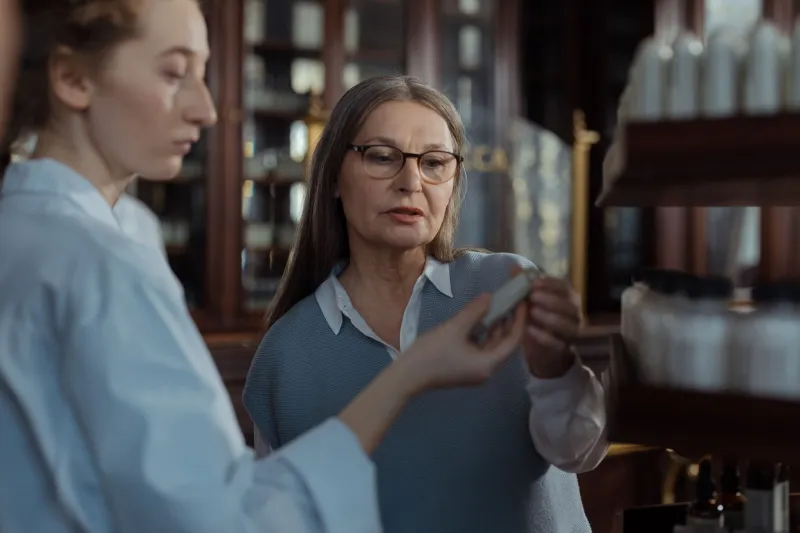
In Vilnius, a working mother with a child running a low-grade fever does not schedule a pediatrician appointment three weeks out. She does not sit in an urgent care waiting room for two hours. She walks into her neighborhood pharmacy, describes her child's symptoms to a licensed pharmacist, and leaves with a clinically sound recommendation — sometimes accompanied by an appropriate over-the-counter remedy, sometimes with a referral to a physician if the situation warrants it.
This is not a gap in the system. It is the system, functioning precisely as designed.
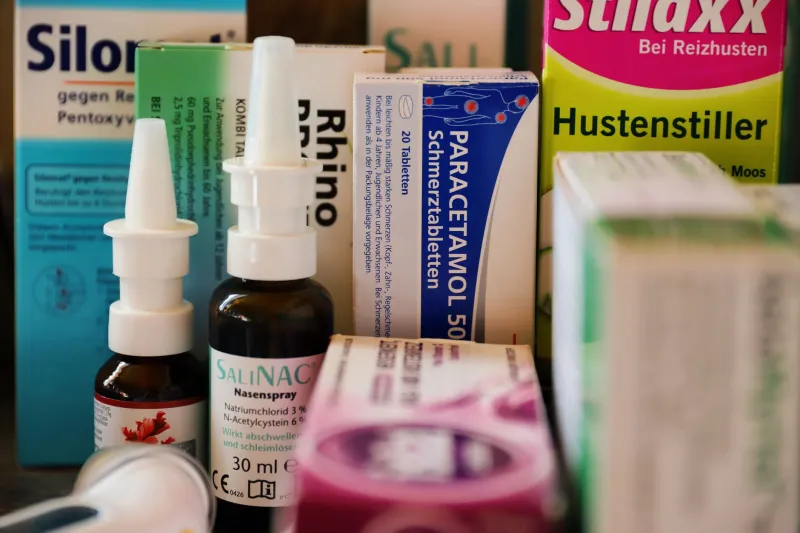
Across Lithuania, Latvia, Estonia, and much of Central and Eastern Europe, community pharmacists serve as the first point of clinical contact for a wide spectrum of minor health concerns. Sore throats, urinary tract infections, minor skin conditions, headache management, digestive complaints — these are handled at the pharmacy counter with a degree of clinical engagement that most Americans would associate exclusively with a physician's office.
In the United States, that same mother faces a fundamentally different infrastructure. One designed, critics argue, not around patient efficiency but around billing opportunity.
What "Direct Access" Actually Means in Practice
The phrase "pharmacist direct access" may sound bureaucratic, but its practical implications are profound. In Eastern European pharmacy models, patients are not merely purchasing products — they are receiving triage-level clinical consultations from professionals trained specifically to provide them.
Lithuanian pharmacists complete a five-year university program that includes substantial clinical training in symptom recognition, pharmacotherapy, and patient counseling. They are legally authorized — and professionally expected — to assess presenting complaints, recommend appropriate treatments, and identify cases that require escalation to a physician.
The result is a tiered system that functions with remarkable efficiency. Minor complaints are resolved at the pharmacy level. Moderate or ambiguous presentations are referred upward. Physicians, freed from the burden of treating conditions that do not require their level of expertise, can focus their time on cases that genuinely demand it.
Data from the Lithuanian Pharmacists' Association and regional health ministry reports consistently show that this model reduces unnecessary physician visits by a measurable margin — some estimates place the figure between 20 and 35 percent for primary care consultations — while maintaining patient safety outcomes comparable to physician-led triage.
The American Waiting Room as a Policy Choice
Americans tend to experience the waiting room as an inconvenience of life. They are less likely to recognize it as a policy outcome.
In the United States, pharmacists are among the most accessible and highly trained healthcare professionals in the country. The average American lives within five miles of a pharmacy. Pharmacists hold doctoral-level degrees. They possess deep, specialized knowledge of drug interactions, contraindications, and therapeutic alternatives that many physicians candidly acknowledge exceeds their own.
And yet, the American healthcare system has systematically constrained pharmacists to a dispensing role. The reasons are not mysterious, even if they are rarely stated plainly.
Insurance reimbursement structures in the US are built around physician-driven encounters. A pharmacist consultation, however clinically valuable, generates no billable procedure code under most insurance frameworks. There is no financial incentive for insurers to route patients toward pharmacist-led triage — and a very clear financial incentive to route them toward billable physician visits.
Medical professional associations, meanwhile, have historically lobbied against expansions of pharmacist scope of practice, framing the issue as one of patient safety rather than market protection. The distinction matters. Opponents of direct-access pharmacy models in the US rarely cite evidence of harm from European systems. They cite liability concerns, scope-of-practice boundaries, and the importance of physician oversight — arguments that, examined carefully, tend to collapse under the weight of the evidence from countries where these models operate daily.
What the Numbers Say
The cost implications of the American model are not trivial. The average urgent care visit in the United States costs between $150 and $300 out of pocket, with insured visits adding co-pays and administrative overhead on top. A physician office visit for a routine complaint frequently exceeds $250 when facility fees are included.
A pharmacist consultation in Lithuania costs the patient nothing beyond the medication itself, if medication is indicated. The pharmacist is compensated through a combination of professional service fees built into the pharmacy's operating model and, in some cases, state health fund arrangements that recognize consultation as a reimbursable healthcare service.
Scaled to the volume of minor health complaints that Americans currently route through urgent care and primary care — an estimated 250 million such visits annually, according to various health policy analyses — the potential savings are staggering. Conservative modeling suggests that redirecting even 15 percent of those encounters to qualified pharmacist consultation could reduce national healthcare expenditure by tens of billions of dollars per year.
Patient satisfaction metrics from Eastern European countries with robust direct-access pharmacy systems are consistently high. Patients report shorter resolution times, greater accessibility, and comparable confidence in clinical outcomes relative to physician visits for equivalent complaints.
The Obstacles Are Political, Not Clinical
It would be inaccurate to suggest that American pharmacists are unaware of this disparity. Many are acutely aware of it. The American Pharmacists Association has advocated for expanded scope-of-practice legislation in numerous states, with incremental progress achieved in areas such as vaccine administration, hormonal contraception dispensing, and certain prescription adaptations.
But the structural barriers remain formidable. State-by-state scope-of-practice laws create a patchwork of what pharmacists are permitted to do, ensuring that no consistent national model can emerge. Federal reimbursement frameworks have been slow to evolve. And the insurance industry, which profits from the current system's complexity, has shown little appetite for reforms that would reduce billable physician encounters.
The Eastern European experience does not suggest that pharmacists should replace physicians. It suggests that the current American allocation of clinical responsibility is inefficient, expensive, and — for the patients sitting in those waiting rooms — entirely unnecessary.
The pharmacy counter is already there. The trained professional is already there. The question is whether American health policy is willing to let them do their jobs.