Four Euros at the Counter: The Price Ceiling That Changed How Patients Think About Medicine

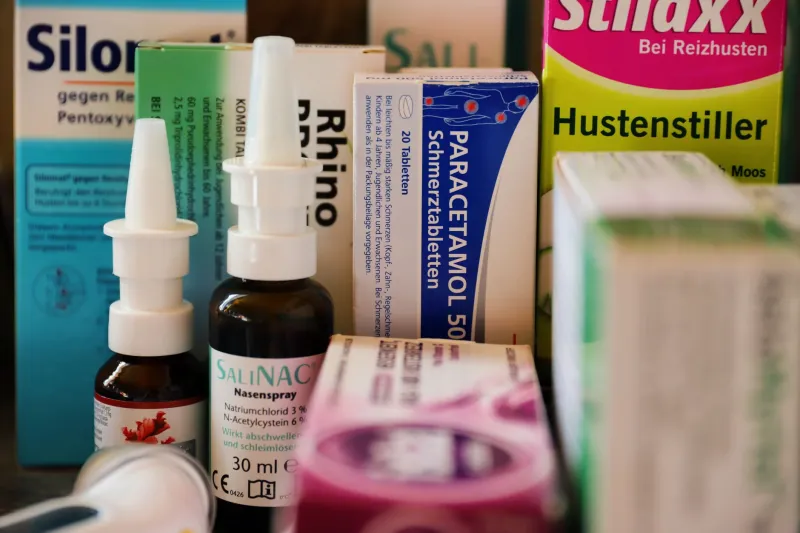
Photo: Damien Salas, Public domain, via Wikimedia Commons
There is a moment of quiet disorientation every American experiences in a Baltic pharmacy for the first time: they ask the price of a generic medication, the pharmacist answers, and the number is not a question mark. It is a known quantity—often in the range of a few euros—and it was knowable before the patient ever walked in.
This is not an accident of a small market. It is the deliberate output of a policy architecture built on reference pricing and transparent public procurement, and it produces something American patients have almost never had: certainty.
How the Model Works
Under reference pricing, the public payer or the state sets a reimbursement benchmark for a group of therapeutically equivalent drugs—typically the price of the least expensive adequate generic. Manufacturers who want their product reimbursed must compete at or near that benchmark. Patients choosing a pricier branded version pay the difference themselves; those accepting the reference product pay little or nothing.
Layered on top is procurement transparency: state tenders for hospital and publicly funded medicines are published, negotiated openly, and subject to scrutiny. In Estonia and Lithuania, this has compressed generic prices to a fraction of US levels for the same molecules, made by the same global manufacturers.
The Psychology of a Predictable Price
The most underappreciated effect is behavioral. When a patient knows a prescription costs €4, several things happen:
- Adherence improves. Cost-related nonadherence—the American euphemism for skipping doses to save money—shrinks when the cost is trivially predictable.
- Delay shrinks. Patients fill prescriptions promptly instead of waiting for payday or gambling that the infection resolves on its own.
- Trust grows. A predictable price signals that the system is not improvising at the patient's expense.
American pharmacy pricing, by contrast, is a three-body problem of list price, insurer negotiation, and pharmacy discount cards, where the same drug can cost $8, $40, or $180 depending on which card you hand over. Patients have learned to treat the price as unknowable until the moment of transaction—and to distrust it accordingly.
The Counterarguments, Taken Seriously
Critics raise two objections, and both deserve honest treatment.
Shortages. Aggressive price compression can push marginal manufacturers out of a small market, and Eastern Europe has seen genuine generic shortages. The mitigation is not abandoning reference pricing but building multi-supplier tenders and stock buffers—tools the Baltics have increasingly adopted.
Innovation. The standard industry argument holds that price caps in small markets are irrelevant to global R&D, which is funded by US and larger EU markets. Health economists broadly agree that a €4 generic cap in Lithuania does not retard innovation; the more serious debate concerns whether aggressive reference pricing, scaled to large markets, would. The Baltic model, precisely because it operates at small-market scale, is a poor test of that fear—and a very good demonstration that low prices are administratively possible.
What America Could Borrow
The Inflation Reduction Act's Medicare negotiation and the rise of fixed-cash-price models suggest movement, however halting. But the deeper Baltic lesson is not the number—it's the architecture: publish the benchmark, standardize the patient's cost, and let predictability do its quiet work. Four euros is a nice price. Knowing it in advance is the part that changes behavior.