Shortages Without Shouting: What Baltic Pharmacies Do When the Drug Isn't There
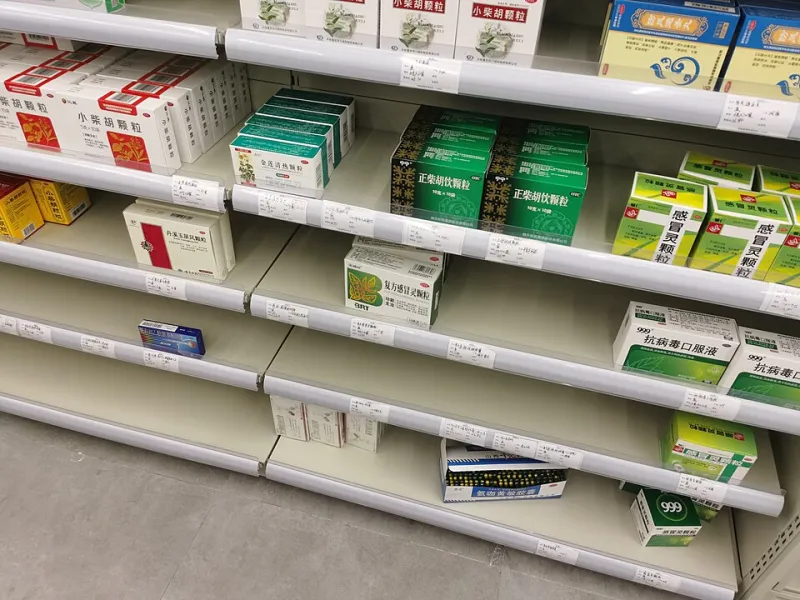
Photo: Shwangtianyuan, CC BY-SA 4.0, via Wikimedia Commons
A Shortage Is a System, Not a Surprise
In 2026, American patients still encounter empty shelves for generic injectables, stimulants, and other essential medicines. The usual experience is a phone call, a hold message, and a variation of 'we don't have it.' In Lithuania and its Baltic neighbors, shortages are not absent, but they are handled differently. Small national markets, shared electronic systems, and close relationships between pharmacies, wholesalers, and prescribers create a response that is more protocol than panic.
The difference is not that Baltic pharmacies have unlimited supply. It is that they treat a shortage as a system problem with operational steps. That orientation is worth examining as US policymakers and patients look for ways to reduce the disruption caused by recurring shortages.
Real-Time Visibility
Baltic pharmacies often have access to wholesaler stock information and, in some cases, shared regional systems that show which nearby pharmacy has a product. National medicines agencies publish shortage lists and guidance. When a patient arrives and the shelf is empty, the pharmacist can often check an alternative source before the patient leaves the counter.
The United States has improved its shortage tracking. The FDA and professional societies maintain databases, and large chains can see inventory across their own stores. But patient-level stock visibility remains fragmented. An independent pharmacy may need to call several wholesalers and competitors. A patient may need to repeat the same calls. In 2026, the information exists in pieces, but it is not reliably assembled at the point of care.
Therapeutic Substitution With Guardrails
Baltic pharmacists work within substitution lists and protocols. If a prescribed medicine is unavailable, they can propose an interchangeable generic or, in some cases, a therapeutic alternative after contacting the prescriber. The change is documented, and the patient is told what is different and why. The key is that substitution is governed by rules and pharmacist training, not improvisation.
In the United States, generic substitution is routine, but therapeutic substitution generally requires prescriber authorization. That is a reasonable safety barrier, yet it can become a bottleneck during a shortage. Pre-approved protocols for common shortage scenarios could reduce delays while preserving oversight. The Baltic experience suggests that clear equivalence lists and pharmacist documentation can make substitution faster without making it reckless.
The Conversation at the Counter
A shortage is also a communication event. In Baltic pharmacies, the pharmacist is expected to explain why the medicine is missing, how long the gap may last, what alternatives exist, and whether the patient should wait or contact the prescriber. The explanation does not eliminate frustration, but it reduces the risk that patients will improvise dangerously, borrow medicines, or turn to unverified online sellers.
In the US, patients often receive only the fact of nonavailability. Pharmacy teams are stretched, and privacy concerns can make detailed conversation difficult. Still, scripts and training can help. A short, honest explanation is better than silence. It is also a form of patient safety.
Where the US Still Struggles in 2026
US shortages are shaped by fragmentation across payers, wholesalers, chains, and manufacturers. Drug allocation decisions may be invisible to patients and even to some prescribers. Pharmacy closures have reduced redundancy in many communities, so a shortage at one store can become a desert at the neighborhood level. National stock visibility remains limited, and reimbursement rarely pays for the pharmacist time required to solve a shortage well.
There is progress. Some states and professional groups are piloting better shortage communication, and health systems increasingly use formulary alternatives. But the patient experience is still inconsistent. The Baltic model is not a template that can be copied whole, but its emphasis on visibility, protocol, and conversation is instructive.
Practical Lessons for Patients
American patients can ask better questions. Call ahead and ask whether the pharmacy has the medicine or can check nearby stores. Ask whether a generic or therapeutic alternative is available and whether the prescriber needs to be contacted. Ask about partial fills and bridge supplies. Keep an updated medication list. Avoid unverified online pharmacies, especially during a shortage when desperation is high. For policymakers, the lessons are equally practical: fund stock visibility, pay for pharmacist consultation, clarify substitution protocols, and require transparency from manufacturers.
Aptekai.t has documented how European pharmacy systems often treat access as infrastructure rather than a personal scramble. The Baltic response to shortages is not perfect, but it keeps the pharmacist in the conversation. That alone is a meaningful safety feature.