The Side Effect Nobody Reports Is a Signal Lost

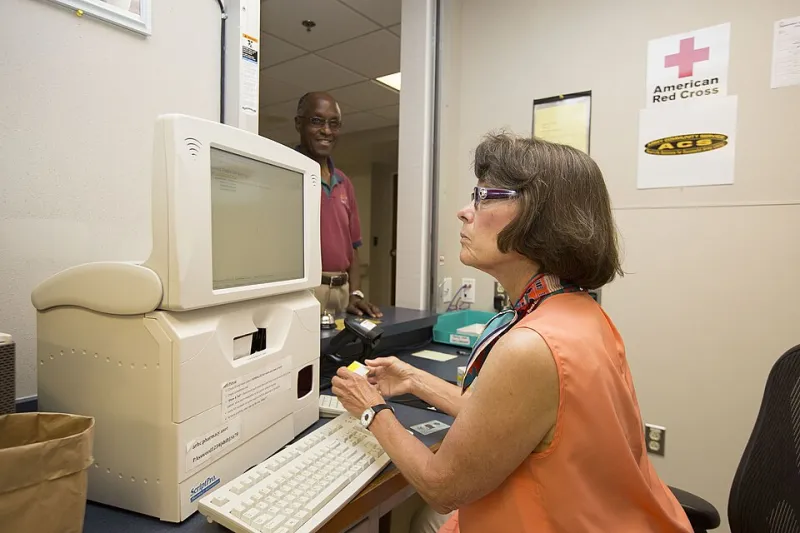
Photo: pharmacist counseling patient about medication side effects at pharmacy counter, via wallpaperaccess.com
A side effect is a strange kind of clinical event. It can be mild enough to ignore, serious enough to hospitalize, or ambiguous enough that even the patient is not sure it counts. The difference between a safety signal and a statistical ghost often comes down to whether someone writes it down. In the United States, that writing is largely voluntary. In Lithuania and its Baltic neighbors, the pharmacist is positioned closer to the reporting process. Aptekai.t's argument is simple: a pharmacy-first reporting culture is not bureaucratic virtue. It is a safety technology.
The reporting gap is a design choice
Pharmacovigilance is the science of detecting, assessing, and preventing adverse effects from medicines. Every modern regulator depends on it. The European Union operates a centralized system for collecting and evaluating suspected adverse reactions, with national authorities and marketing authorization holders playing defined roles. Healthcare professionals are encouraged to report. In practice, pharmacists in Lithuania, Latvia, and Estonia are well placed to do so because they see the patient at the point of dispensing, they hear the follow-up questions, and they often see the pattern before a prescriber does.
America has a system too. The Food and Drug Administration maintains MedWatch and the FDA Adverse Event Reporting System. Manufacturers are required to report serious adverse events. Healthcare professionals and patients can submit reports voluntarily. The system has produced important safety actions. But voluntary reporting is not the same as routine reporting. It depends on time, awareness, and workflow. A busy pharmacist may counsel a patient about a rash, recommend stopping the medicine, and call the prescriber. Whether that interaction becomes a formal report depends on whether anyone has the time and the habit.
That is a design choice, not a law of nature. A system that expects reports from the counter will get more reports from the counter. A system that treats reporting as an optional administrative task will miss signals.
How the Baltic counter becomes a sensor
The Baltic advantage is not that every pharmacist is a pharmacovigilance specialist. It is that the professional culture places the pharmacist in the reporting chain. In some settings, reporting is embedded in pharmacy workflows and professional expectations. The pharmacist is trained to recognize serious reactions, document them, and route them to the appropriate authority. The patient does not need to know the name of the national system. They need a pharmacist who knows what to do with the information.
This matters for several reasons. First, pharmacists see the patient after the prescription is filled, not only before. They hear about the nausea, the dizziness, the rash, or the unexpected bruising. Second, pharmacists often see the whole medication list, including over-the-counter products and supplements that a patient may not mention to a prescriber. Third, pharmacists are accessible. A patient may not schedule a follow-up visit for a mild reaction, but they will ask the pharmacist a question at the counter.
The Baltic model is not uniform. Resources, training, and reporting rates vary. But the orientation is different. The question is not whether a pharmacist happens to have time to file a report. The question is how the system makes reporting part of normal practice.
Why America's voluntary system misses signals
The American system has real strengths. MedWatch is open to patients and clinicians. The FDA can act on cumulative evidence. Manufacturers have legal reporting obligations. But the voluntary channel leaves gaps that are predictable. A pharmacist may not know that a reaction is reportable. A patient may not know that MedWatch exists. A prescriber may assume the pharmacist reported it. A pharmacy chain may lack a simple internal workflow. A serious reaction may be attributed to the underlying disease rather than the medicine.
Underreporting is not a scandal in the sense of a single bad actor. It is a structural weakness. The system relies on goodwill and awareness in a setting that is already stretched. When a pharmacist has fifteen minutes to counsel a patient, check insurance, and resolve a prior authorization, a voluntary report can fall to the bottom of the list. That is not a failure of professionalism. It is a failure of design.
What patients should know
Patients do not need to become pharmacovigilance experts, but they should know a few practical facts.
- A side effect does not have to be severe to be worth mentioning. Unusual bruising, persistent diarrhea, mood changes, or a rash can matter.
- Do not stop a prescription medicine abruptly without advice, especially for medicines that treat seizures, blood pressure, depression, or heart conditions.
- Ask your pharmacist whether the reaction should be reported. A good pharmacist will know the local route or will find out.
- Keep the medicine name, dose, lot number if available, start date, and a short description of the reaction. That information makes a report more useful.
- In the United States, patients and clinicians can submit a report through MedWatch. You can also tell the prescriber, who may have a separate reporting obligation.
- If the reaction is severe, seek medical care first. Reporting is not a substitute for treatment.
A modest proposal
A stronger American system would not require a new federal agency. It would require a clearer expectation that pharmacists participate in reporting, better workflows at the pharmacy counter, and patient education that makes reporting normal. Pharmacy chains could build a short reporting prompt into their dispensing software. Professional schools could treat pharmacovigilance as a core skill rather than an elective. Insurers and regulators could recognize that a report filed today may prevent a hospitalization next year.
The Baltic lesson is not that every pharmacist must become an investigator. It is that the counter is a sensor. It detects what the clinic may miss. If the sensor is never connected to the system, the signal disappears. American patients should ask their pharmacists about side effects, and American pharmacy systems should make it easier for those pharmacists to answer. A side effect nobody reports is not just a missed form. It is a lost chance to make the next prescription safer.